

Why Formula 1 Should Study Arsenal's Cultural Playbook
Arsenal have proven that showing loyalty to its community pays dividends. So, what can the world of Formula 1 learn from the Premier League winners’ success?
After twenty-two years spent coming in second, third, and that embarrassing 12th finish that does not exist in my mind, Arsenal finally has a Premier League title. And the sun is shining over Great Britain, obviously because of this victory. It’s not a coincidence; it’s just science.
The collective spontaneous celebrations that have taken place following the Gunners’ victory have captured much attention. As Manchester City drew with Bournemouth, sealing the deal for North London, crowds gathered at the Emirates Stadium, proving once and for all that Mikel Arteta has not only helped his players succeed, but he has also helped change the club’s culture off the pitch.
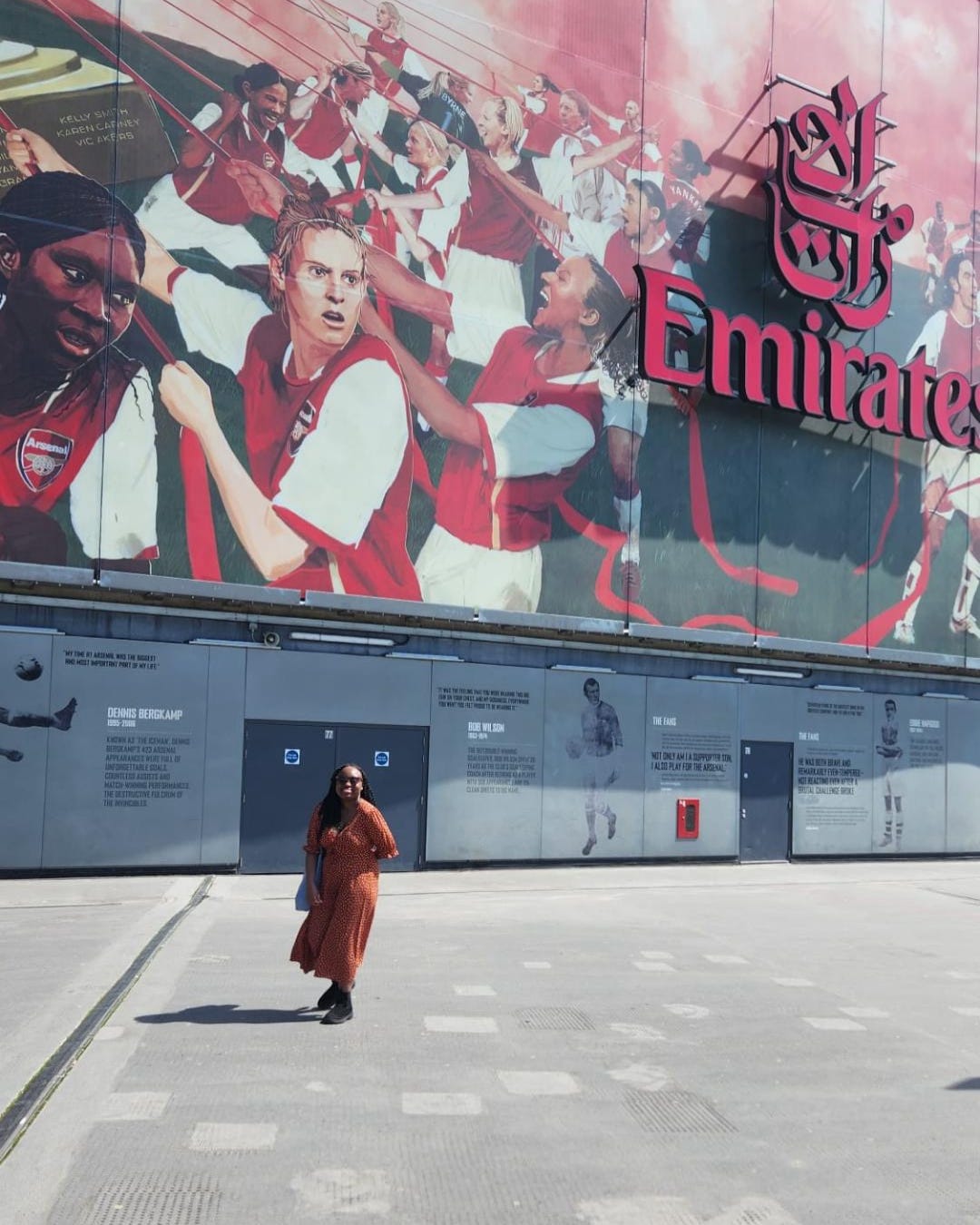
At the end of the day, very few football clubs in the United Kingdom, let alone the rest of the world, can pull crowds quite like the ones we’ve seen coming together in the streets of London. And to do so without lifting the trophy in so long is particularly impressive.
In motorsport, Formula 1’s global reach has grown significantly in recent years, particularly with female fans, partly in thanks to Netflix’s documentary series Drive to Survive. But, despite this, the sport has not comfortably shaken away an innate sense of elitism. The sport, unfortunately, is still viewed as one for those with spare money and influence, when the majority of its fanbase do not fit that mould. Whilst people like myself have no qualms waking up at four o’clock in the morning to watch a group of millionaires drive very fast cars on a Sunday morning, there remains a disconnect between the sport and its fandom.
Despite growing up in Birmingham, being an Arsenal fan has never felt out of reach for me. If anything, it always makes visits to London that more special. The connection between my mother and her years spent living in North London has never faded, even after 20-plus years away. So, I am compelled to ask the question: what can F1 learn from Arsenal?
Well, the difference in culture is a big place to start. Arsenal understands its fanbase and their culture in a way that F1 seemingly does not. Sure, there are individual instances. After all, as we know, there are two religions in Italy: Ferrari, and the Catholic Church (and I think that even the Pope would agree Ferrari may come first for many). However, there is still a glaring barrier between the sport and the wider fan base; a cultural disconnect.
Pro tennis player Ayan Broomfield recently spoke to Hard Court about this exact problem in the context of tennis, with a lack of representation visible across all aspects of tournament life: “It’s just that little [sense that] you don’t necessarily … [they] don’t think you actually belong. It’s just not pleasant. It’s not fun. And I think it is because there isn’t enough representation of women of colour at the tournament.”
I have the very strong suspicion that in stepping into the paddock working, or even as a fan (if I win the lottery, there will be signs), I would probably be asked a million times, in a million ways, to prove that I’m meant to be there.
Arsenal have emphatically embraced their grassroots supporter groups, weaving themselves into the fabric of the communities that support them. From partnering with, and going out of their way to uplift, supporter groups for women, disabled people, and international fans, we can see that Arsenal actively desire to have a large number of fans from all walks of life.
Arsenal is in the blood of North London and far beyond. They have embraced their diverse fanbase, receiving that love and loyalty tenfold. There’s a reason Declan Rice and Bukayo Saka were still outside the Emirates hugging fans at five o’clock in the morning following the win.
Being a Black Arsenal supporter and a Black F1 fan are two very different experiences. Arsenal has long embraced its connection to the Black British community, highlighting Gunner legends like Ian Wright, Paul Davies, Alex Scott, and Thierry Henry consistently, and make a conscious effort to encourage diverse talent from its academies. Black Arsenal, a landmark book by Dr Clive Nwonka and Matthew Harle, offered a comprehensive exploration of this connection. And, for the 2024/25 season, their away kit, created in partnership with British African heritage brand Labrum London, featured the colours of the Pan-African flag, reflecting the club’s appreciation for its Black players and fans.
In contrast, F1 races parachute into global cities, setting up an exclusionary VIP paddock for those who are blessed with money or a large follower count, and then leave, rarely engaging with the local culture. There is a lack of true fan engagement outside of social media and a lack of connection to local communities or subcultures. Perhaps that is an attraction for the sport, to feel universally cohesive in some way. Ultimately, the sport remains for those who can afford it and who are mostly white.
Lewis Hamilton, the grid’s only Black driver, seems to solely carry the weight of racial representation in F1. His presence over two decades has brought a diverse range of fans to the sport, seeing that someone who is not a rich white man, or the son of a rich white man, can succeed in the sport to the highest degree. It often feels as though, in having Hamilton, F1 believes it can pat itself on the back for a job well done. Well, that and ally Sebastian Vettel in his activism era. However, for true change, diversity must not only be on the grid, or the pitch, but behind the scenes. Arsenal have made strides in this area too, with a number of schemes and career opportunities highlighted throughout their community work.
Like Arsenal (the club he is notably a fan of) Hamilton’s Mission 44 has worked to encourage young people from a diverse range of backgrounds into motorsports. But again, the burden lies on one driver from a marginalised background, in the same way it seems to be on Susie Wolff to encourage women into motorsports.
Sport is an arena that truly brings people together, but it is hard to be together when the sport does not engage with its fans on their level, and does not seek to work to understand the cultures and subcultures behind it all. To build a better sport and produce winning results, more teams should engage with the communities that support them on all levels. We should be made to feel part of a wider community rather than small, disconnected groups who are still, in many ways, unplugged from the teams and drivers that we love.
Look at Arsenal. Loyalty, in both ways, pays for itself.
 | A guest post by
|
True! Representation that falls entirely on one individual isn't a system working, it's a system being carried.